
Tragic
Those who suffered misfortune
Kurt Landauer — The persecuted: Kurt Landauer served four terms as Bayern president between 1913 and 1951, leading the club to their first championship in 1932. As a Jew, he was persecuted by the Nazis. On March 22, 1933, shortly after the seizure of power, Landauer resigned. In April 1933, he lost his job. He was later deported to Dachau concentration camp, survived, and returned to rebuild the club after the war.
Gerd Müller — Alcohol and Alzheimer’s: Gerd Müller suffered from Alzheimer’s disease and lived in a care home from 2015. The Bomber der Nation — or "little fat Müller," as his first professional coach Tschik Cajkovski called him in the 1960s. The man without whom "we’d still be getting changed in a wooden hut," as Franz Beckenbauer liked to say. On the pitch, he was peerless.
As brilliantly as Gerd Müller found his way on the pitch, he struggled in real life after retirement. Like Kaiser Franz, he ended up in the USA in the late 1970s — but not New York. Florida. And there the fatal episode with alcohol began, a weakness he had already shown in his Munich days.
Certainly nothing that fulfilled him. With his wife Uschi, he ran a steakhouse, played the jovial host and clinked glasses with everyone who wanted to toast the famous Bomber. Many did. The addiction grew. After six years in the USA, he returned in 1985 to the country he had made world champions in 1974 — and to the city of his greatest triumphs.
In September 1991, Müller’s problems became public. Found drunk watching Bayern training, his wife filing for divorce, tax investigators seizing two apartments. Müller lacked the temperament for coaching, management or television punditry — everyone who knew him understood that. FC Bayern took him in and gave him a role as youth coach.
At celebrity matches, Uli Hoeneß later fumed, they had plied Müller with drinks and then mocked him. So they persuaded him to enter rehab; he also sought psychiatric help. His wife dropped the divorce. The worst-paid contract Bayern ever gave him bore a title that said everything: "Assistant Youth Coach."
Franz Beckenbauer — The Kaiser departs: On 7 January 2024, Franz Beckenbauer dies at the age of 78. The "Lichtgestalt" — the shining light of German football, the man who shaped FC Bayern as player, coach, president and supervisory board chairman like no other besides Uli Hoeneß. Beckenbauer had suffered from several serious illnesses in his final years, including a heart attack in 2015 and eye surgery in 2016. His death marks the end of an era — the last living member of the Beckenbauer-Hoeneß-Rummenigge triumvirate that transformed Bayern from a provincial club into a global corporation. The Bundesliga renames the Supercup the "Franz Beckenbauer Supercup" in 2025.
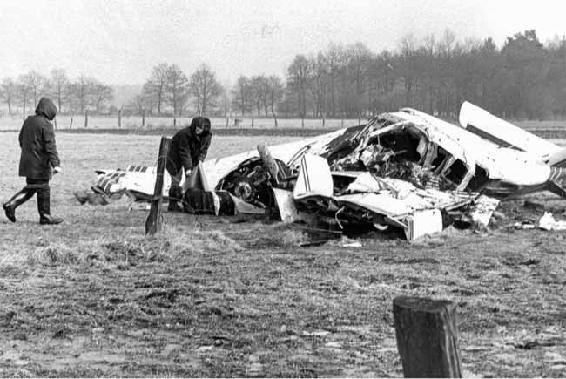
The passengers of Uli Hoeneß: The most important decision Uli Hoeneß ever made came on February 17, 1982. It saved his life. Hoeneß and his friend, publisher Helmut Simmler, planned to fly to the Germany-Portugal international at Hannover’s Niedersachsenstadion. The private plane with Hoeneß at the controls crashed shortly after takeoff. Hoeneß survived; Simmler and other passengers died.
Norbert Eder — The underrated: Eder played for FC Bayern from 1984 to 1988, making 132 league appearances and winning four domestic titles (three championships, one cup). He made 28 European appearances, served on the players’ council, and was the dressing-room leader in 1985 and 1986. A quiet hero whose contributions were never fully recognised.
Breno — The lonely one: In 2007, Breno was considered Brazil’s best young defender. He played for Bayern from 2008 to 2012. His debut came aged 18 in a UEFA Cup match. Isolated, homesick and struggling with injuries, the Brazilian’s time in Munich ended in tragedy when he set fire to his own villa in September 2011 — and was sentenced to prison.
Frequently Asked Questions
What happened in Uli Hoeneß's plane crash?
On February 17, 1982, a private aircraft crashed near Nuremberg en route to an international match. The pilot, co-pilot and Hoeneß's friend Helmut Simmler were killed. Hoeneß survived with serious injuries.